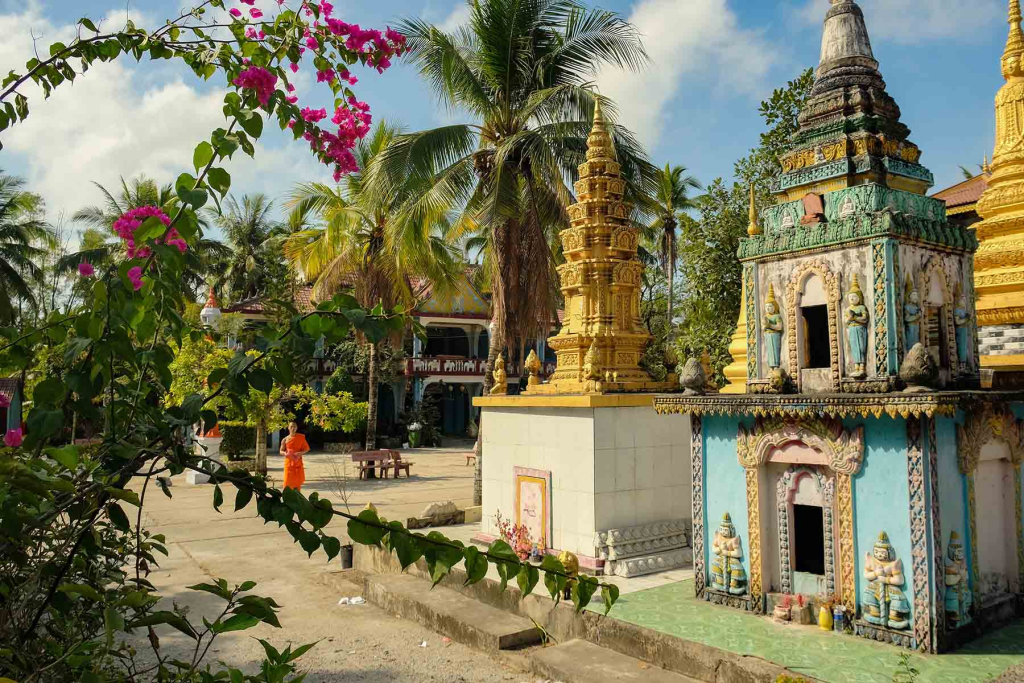

Krang Kroch Pagoda, also known as Hang Cong Pagoda, stands out with its vibrant pink hue and unique row of ancient rain trees, attracting visitors from near and far.
History and Meaning Behind the Name
Hang Cong Pagoda’s official name is Prochum Meáp ChhƯm Kiriram, located in Chau Lang Commune, Tri Ton District, An Giang Province. In Khmer, “Prochum Meáp ChhƯm Kiriram” means “the temple in the middle of the mountain.” The name Krang Kroch comes from its original location on a high mound filled with wild pomelo trees (where “Krang” means mound, and “Kroch” means wild pomelo). However, the most distinctive feature of this temple is the row of ancient rain trees, leading to the affectionate local name “Hang Cong Pagoda.”
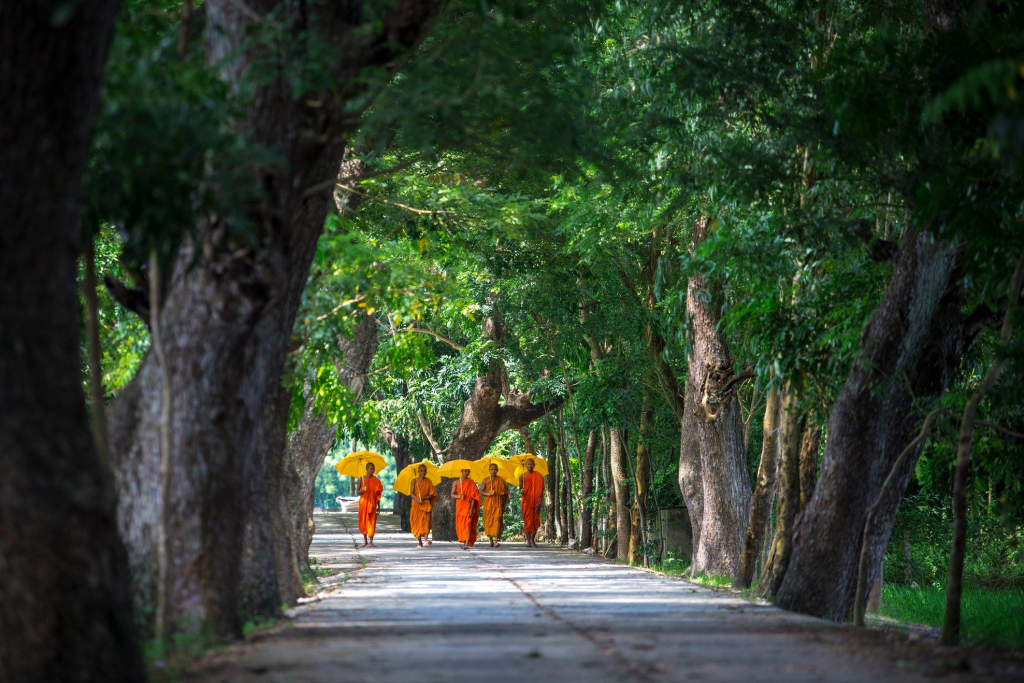
The pagoda was built in 1608 on an elevated area surrounded by mountains. Previously, accessing the temple was difficult as visitors had to cross rice fields. In 1965, Monk Khunh Sa Rith mobilized Buddhist followers to donate land to build a proper road. Upon completion, numerous rain trees were planted on both sides of the pathway, creating the picturesque scenery seen today.
The Unique Beauty of Hang Cong Pagoda
The Iconic Row of Ancient Rain Trees
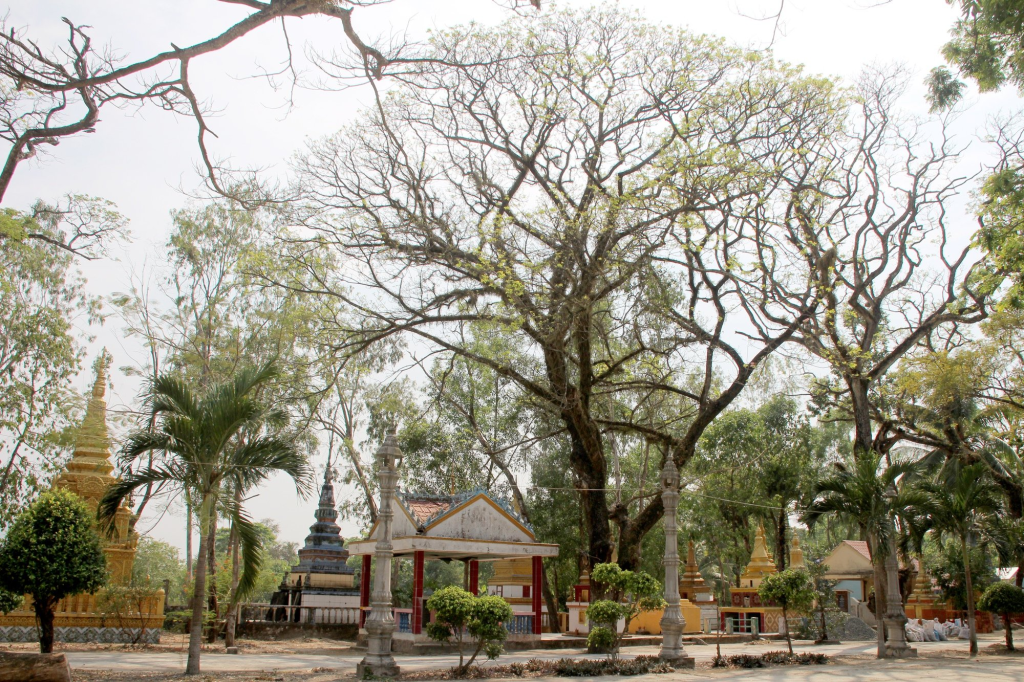
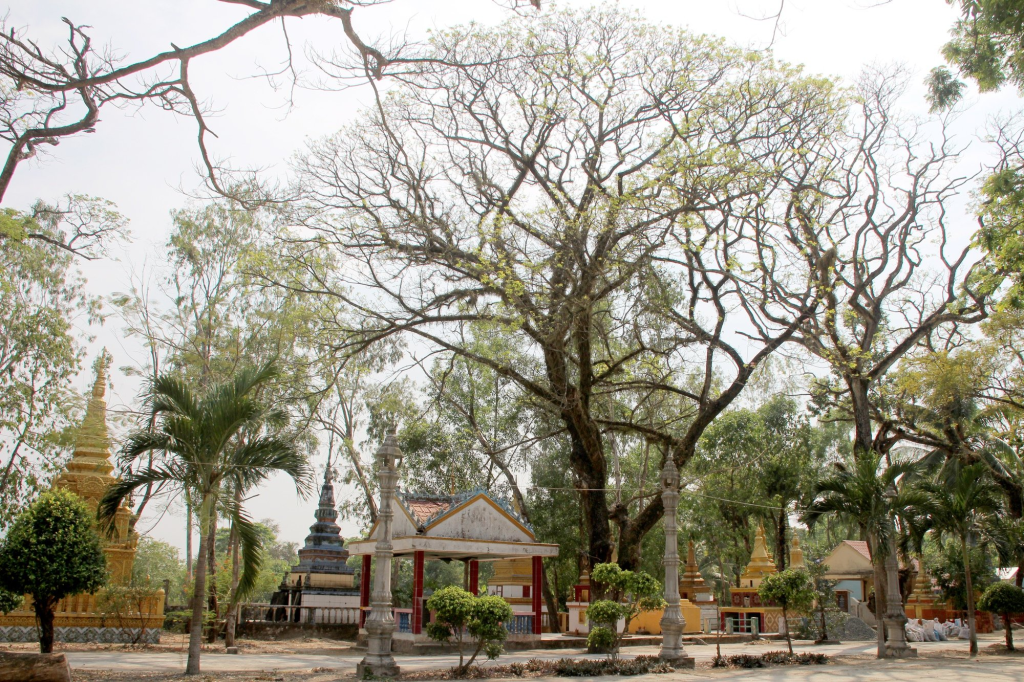
One of the most remarkable features of Hang Cong Pagoda is the row of ancient rain trees stretching from the entrance to the temple courtyard. Currently, there are about 70 large trees, with thick trunks requiring two to three people to embrace fully. Their branches arch toward each other, forming a natural canopy that provides shade and adds to the temple’s serene ambiance. During certain seasons, the shedding leaves reveal the trees’ aged and weathered trunks, adding a mysterious charm.
Rain trees, also known as monkey pod trees or Samanea saman, are common in various regions worldwide. Over time, some of the older trees have decayed, requiring replanting to preserve the temple’s iconic landscape.
The Vibrant Pink Main Hall
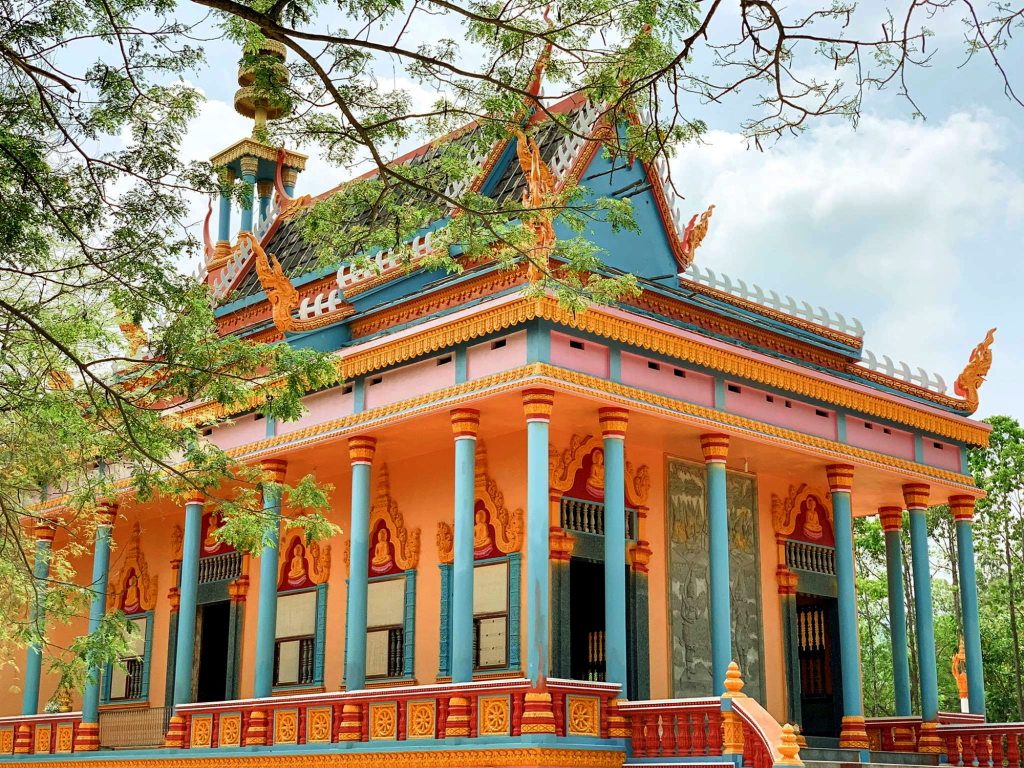
In addition to its lush greenery, the temple is also known for its striking pink main hall. Originally, the temple hall was painted in the traditional golden hue, but it was later repainted in vibrant pink, standing out amidst the surrounding greenery. The architectural details remain intact, showcasing exquisite Khmer craftsmanship through intricate carvings on the towers, main hall, and roof. The fusion of traditional Khmer architecture and bright colors makes Hang Cong Pagoda a prominent landmark in the Bay Nui region.
The temple also features an ancient gate at the rear entrance, adding a timeless charm and a mystical atmosphere.
Cultural and Community Significance
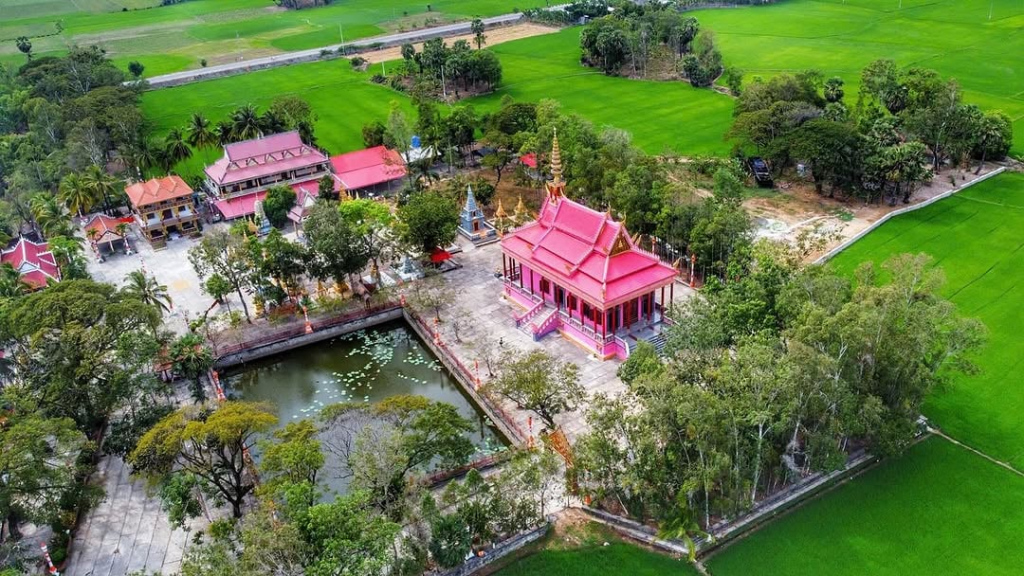
Like many Khmer Theravada Buddhist temples, Hang Cong Pagoda serves as a place of worship and a cultural hub for the local community. Within the temple grounds are several stupas containing the ashes of the deceased. Depending on their financial means, families can construct private stupas or place remains in communal stupas maintained by the temple. The temple also hosts Pali language and Khmer script classes for monks and young learners, contributing to the preservation of Khmer culture and traditions.
Visiting Hang Cong Pagoda
If you have the opportunity to explore the Bay Nui region, don’t miss a visit to Hang Cong Pagoda to admire its tranquil beauty. Strolling under the canopy of ancient rain trees, breathing in the fresh air, and learning about the rich cultural heritage of the Khmer people will be an unforgettable experience.
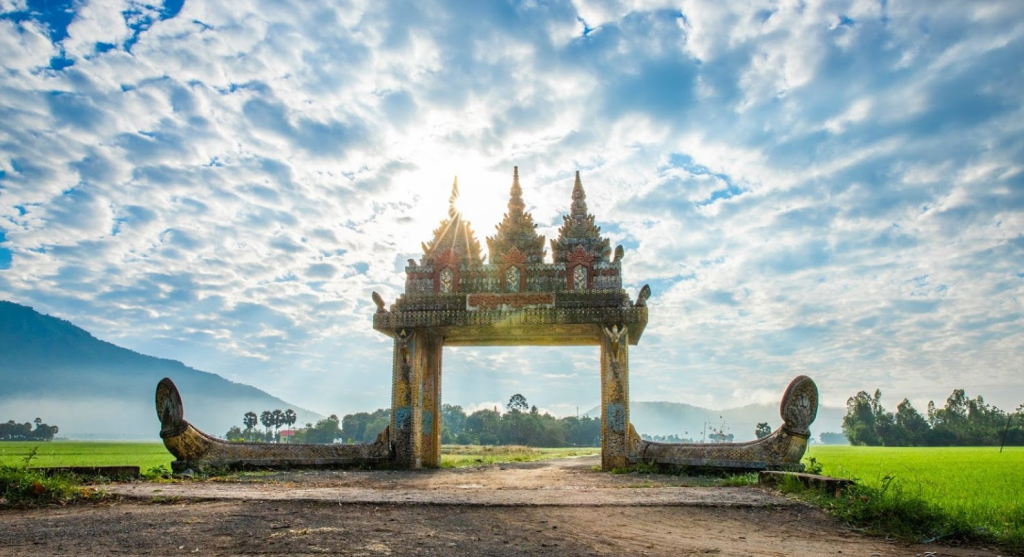
Just 2 km from Hang Cong Pagoda lies the stunning entrance gate of Koh Kas Pagoda, often referred to as the “Sky Gate.” This beautifully adorned gate, set against vast rice fields, showcases intricate Khmer carvings and is a popular check-in spot for visitors exploring Tri Ton.
With its blend of natural beauty and remarkable architecture, Hang Cong Pagoda is not just a spiritual destination but also a must-visit landmark in An Giang. If you seek peace, nostalgia, and rustic charm, this temple is a perfect stop on your journey.