
Nestled within the Imperial City of Hue, Kien Trung Palace (Điện Kiến Trung) stands as a magnificent blend of Eastern tradition and Western elegance. This historic palace, once a royal residence, was recently brought back to life — becoming both a cultural treasure and a cinematic landmark in “The Last Empress.”
Explore Hue and more with HaNoiTravelBug
A Majestic Jewel Amid the Ancient Capital
Built between 1921 and 1923 under the reign of Emperor Khai Dinh, Kien Trung Palace was the most opulent royal residence of its time. Later, under the rule of Emperor Bao Dai, it was renovated and became the official living quarters for the royal family.
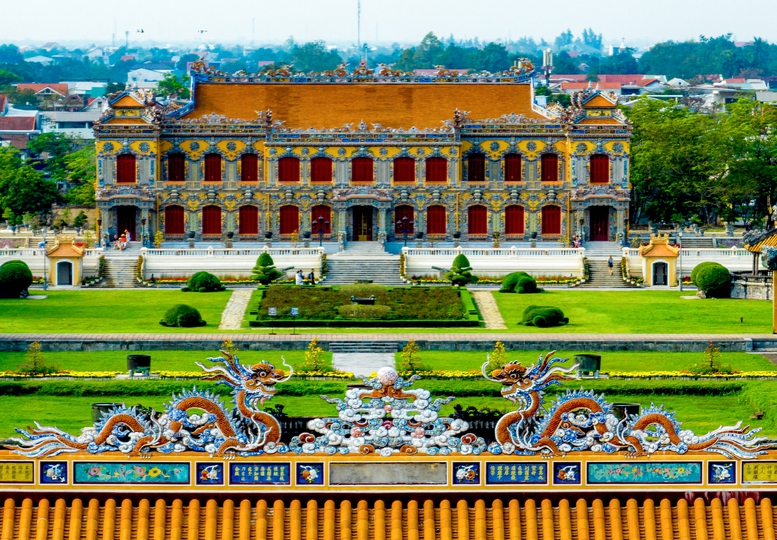
The name “Kiến Trung” carries deep symbolic meaning. “Kiến” means “to establish,” while “Trung” represents righteousness and impartiality. This palace is one of the five most important buildings within the Imperial City of Hue, alongside Thai Hoa Palace, Can Chanh Palace, Can Thanh Palace, and Khon Thai Palac
A Fusion of East and West in Royal Architecture
One of the palace’s most captivating features is its architectural harmony between East and West. The design is a sophisticated blend of Italian Renaissance, French colonial elements, and traditional Vietnamese royal styles.

Its lush gardens, green lawns, and vibrant flower beds create a serene foreground. The central building features 13 large doors, symbolizing openness and grandeur — five doors in the center and four on each wing. The tiled roof is adorned with ceramic mosaics of dragons, signifying power and nobility.
Magnificent Interiors Rich with Imperial Symbolism
The interior is richly decorated with royal motifs and fine details. Elements of Western design subtly enhance the Vietnamese aesthetic, reflecting the early 20th-century cultural fusion. Dominated by shades of royal yellow, the decor echoes the Eastern philosophy of the Five Elements, where yellow symbolizes “earth” — the center and origin of all creation.
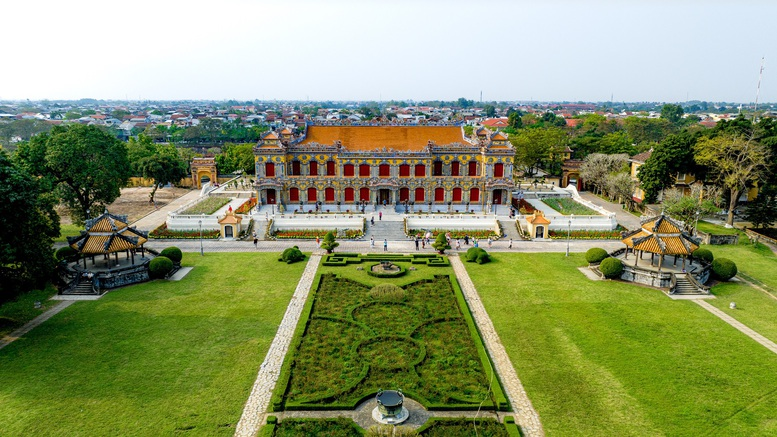
The palace walls and ceilings are meticulously hand-painted and carved based on historical documents. Furniture, decor, and the layout all reflect the regal lifestyle of the Nguyen Dynasty’s last rulers.
A Living Legacy and Cinematic Landmark
Beyond architecture, Kien Trung Palace holds deep historical and cultural value. It was selected as the main filming location for the movie “The Last Empress”, which tells the story of Empress Nam Phuong, the last empress of Vietnam.
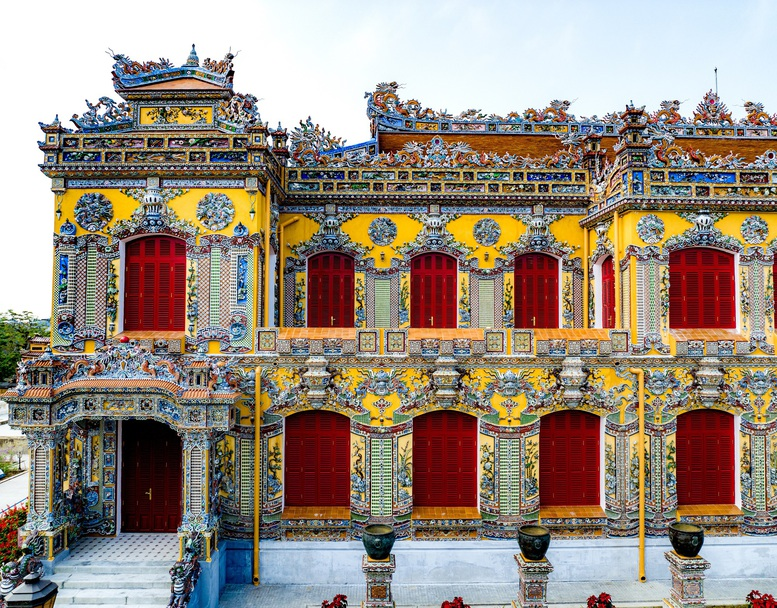
Once destroyed in wartime, the palace has been meticulously restored based on historical records. Today, it stands not only as a monument of the past but as a symbolic bridge between generations — reconnecting modern Vietnam with its imperial legacy.
Discover the Timeless Grandeur of Hue with HaNoiTravelBug
Kien Trung Palace is more than just a historical site — it’s a journey into Vietnam’s regal past, an architectural masterpiece, and a living story told through space and symbolism.
📍 Planning a trip to Hue? Let HaNoiTravelBug take you on an unforgettable exploration of Vietnam’s imperial heartland.