
After years of careful renovation, An Lang Hue – the collective tomb of three emperors of the Nguyen Dynasty – has officially reopened to visitors on August 1, 2024. With a restoration budget of VND 40 billion, this solemn yet historically rich site offers a unique glimpse into Vietnam’s imperial past.
👉 See more: Travel Hue with HaNoiTravelBug
🕰 The History of An Lang Hue
Located in An Cuu Ward, within the complex of Hue Imperial City, An Lang serves as the final resting place for three generations of Nguyen monarchs: Emperor Dục Đức, Emperor Thành Thái, and Emperor Duy Tân.

Though modest compared to other royal mausoleums, An Lang reflects unique architectural and emotional elements, steeped in a complex and tragic history.
👑 A Tragic Beginning: The Tomb of Emperor Tự Đức
After the death of Emperor Tự Đức, his adopted son Ưng Chân ascended the throne on July 19, 1883, under the title Dục Đức. However, just three days into his reign, he was deposed for allegedly violating three imperial taboos: altering the will, wearing inappropriate mourning attire, and indulging in debauchery.
On October 24, 1884, Emperor Dục Đức died of starvation in prison. His body, wrapped in a mat, was carried by two soldiers to be buried. Initially intended to be interred at Tuong Quang Pagoda, the body accidentally fell along the way. A monk was consulted, and the decision was made to bury him right at that spot – the very land that would become An Lang.
🏛 A Family Mausoleum Through Time
In 1890, Emperor Thành Thái – son of Dục Đức – began constructing a proper tomb for his father, marking the origin of An Lang. Despite its royal significance, the architecture remained humble and unpretentious.
Later, due to anti-French resistance, both Emperor Thành Thái and his son Emperor Duy Tân were exiled to Réunion Island. Thành Thái returned in 1953 and died a year later, buried next to his father. Duy Tân perished in a plane crash in Central Africa in 1945, and in 1987, his remains were also brought back to An Lang.
Today, An Lang Hue is the only Nguyen Dynasty mausoleum where three generations of emperors are buried side by side.
🏯 Architectural Features of An Lang Hue
An Lang consists of two main parts:
- Long An Temple: A place of worship housing altars for the three emperors.
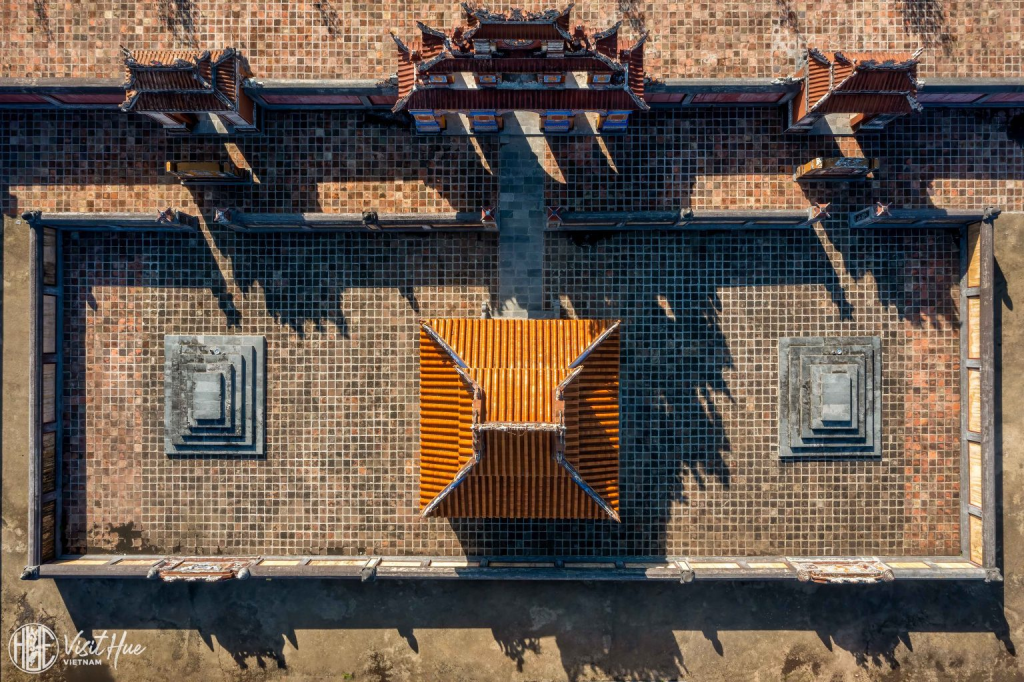
- The Tomb Area: A rectangular compound with no stone statues or stele pavilion (bi dinh), unlike other royal tombs.
Visitors must pass through two Tam Quan gates to enter. Emperor Dục Đức and Empress Từ Minh lie on either side. A notable feature is the “Double Happiness” (song hỷ) character on the screen in front of the emperor’s grave, crafted from ceramic shards.
“Unlike the grandiosity of other tombs, An Lang whispers stories of sorrow, resilience, and dignity.”
🧭 Beyond the Kings: Royal Family Burials
Behind Long An Temple lies what once was the queen’s living quarters, now expanded to include:
- Tombs of Emperor Thành Thái’s wives
- Tombs of Duy Tân’s siblings
- 39 stone tombs of princes and princesses
- 121 earth tombs of other royal family members
From above, An Lang appears serene and symmetrical, surrounded by lush greenery – a sacred sanctuary of the Nguyen lineage.
🌟 Rediscover Imperial Hue with HaNoiTravelBug
Whether you’re a history lover, architecture enthusiast, or spiritual traveler, An Lang offers a poignant and rarely-seen perspective on Vietnam’s royal legacy.
🔍 Don’t just see the grandeur—understand the forgotten stories behind the crown.
Let HaNoiTravelBug craft your journey through Hue’s hidden royal gems.
📞 Call +84 86566934 now for your customized itinerary to the imperial city of Hue and beyond.