
In Vietnam, before eating we say “Chúc ngon miệng!”– meaning ‘enjoy your meal’ (but of course you will.)
While Vietnamese cuisine abroad still flies under the banners of phở and bánh mì, the full spectrum of Vietnamese food is a symphony of delightfully textured, bright and piquant flavours.
The Vietnamese love their food and cooks make the most of each region’s abundant produce and special ingredients to make their meals. Northern food is known for its simplicity; the dishes of central Vietnam are generous in spice and quantity; Southerners like to add sugar. Wherever you travel across the country, you’re sure to eat well.
1. Phở
Phở is the quintessential Vietnamese dish, the word phở referring to the type of noodle used in the recipe. Flat rice noodles dance around with medium-rare slivers of beef or boiled chicken in a hearty beef stock. The more popular of the two widely known varieties is phở Hanoi. Originally from the north, it is distinguished by a clear broth and dressed only with a squeeze of lemon and slices of bird’s eye chili. The southern iteration, phở Nam, has a murkier broth and is served with a bouquet of fresh herbs like bean sprouts, basil, and mint.
The secret to a good bowl of phở lies in its stock. The broth is usually infused with fragrant star anise, clove, and cinnamon to lend a natural sweetness to the mix. This dish is found on almost every street corner and is actually consumed for breakfast, unbeknownst to outsiders.
Try it: Pho Thin, 13 Lo Duc, Hai Ba Trung District in Hanoi or Pho Hoa, 260C Pasteur Street, District 3 in Ho Chi Minh City.
2. Bánh Mì
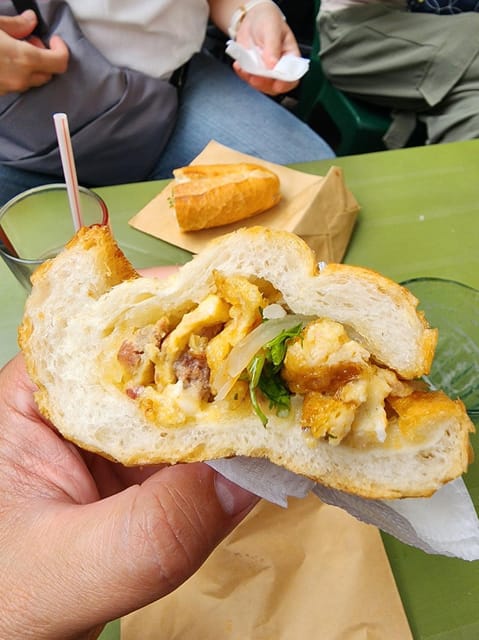
Baguettes may have been adopted from the French, but bánh mì is as Vietnamese as it comes. Paté and margarine are spread swiftly across the soft, chewy interior of a baguette and later, the sandwich is loaded with pickled vegetables, fresh cilantro, pork belly, pork floss, and cucumber. Sink your teeth into the crunchy crust and watch the warm roll give way to a whole scheme of textures.
Try it: Banh My Phuong, 2B Phan Chau Trinh, Hoi An.
3. Cơm Tấm
Back in the day, Vietnamese farmers would eat the fractured rice grains they could not sell. Nowadays, “broken” rice is a food staple for the everyday working-class citizen. For a meal of humble origins, the preparations for cơm tấm can get very decadent.
While it’s prepared in a number of ways, the most popular is cơm tấm sườn nướng ốp la. A fried egg is paired with caramelized grilled pork chop and laid out on a generous heap of broken rice. The dish is then slathered with nước chấm, a mixture of chili, fish sauce, and sugar, and a drizzle of green onion oil. The final touches include a side of shredded pickled carrots and daikon, slices of cucumbers and tomatoes, and crushed fried pork rinds and shallots for garnish.
Try it: A family-operated stall on 260 Vo Van Tan, District 3, Ho Chi Minh City.
4. Bún Bò Huế
A specialty of the old imperial capital, bún bò Huế is not phở’s lesser-known cousin. This spicy noodle soup is a proud central Vietnamese classic. The broth is prepared by simmering beef bones and shank, lemongrass, fermented shrimp sauce, and sugar for that delicate balance of sweet, salty, and umami flavors. The noodles are thicker and more cylindrical than phở. Tender slices of beef shank, oxtail, pig’s knuckles, and cubes of congealed pig’s blood are added to the mix. Top it off with lime wedges, cilantro sprigs, diced green onions, raw sliced onions, banana blossoms, red cabbage, mint, basil, and the list goes on.
Try it: Quan Cam, 45 Le Loi, Hue.
5. Gỏi Cuốn
Gỏi cuốn is the Vietnamese version of a fresh spring roll. The translucent parcels are packed with vermicelli noodles, pork, shrimp, and lettuce, and come with a side of peanut dipping sauce. The southern variation includes herbs such as basil, mint, and coriander. The northern version, called nem cuốn, is similar but uses a different blend of herbs and is served with a fish sauce-based dip.
Try it: Quan An Ngon, 18 Phan Boi Chau, Hoan Kiem District, Hanoi.
6. Chả Giò
Chả giò, also known as nem rán in the north, are crispy fried spring rolls. The filling typically consists of ground pork, mushrooms, glass noodles, and diced vegetables, all seasoned and wrapped in rice paper before being deep-fried to a golden crisp. They are often served with lettuce and herbs, which are used to wrap the rolls before dipping them into a fish sauce-based dipping sauce.
Try it: Ngon Villa, 10 Tong Duy Tan, Hoan Kiem District, Hanoi.
7. Cao Lầu
A Hoi An specialty, cao lầu is a noodle dish that reflects the town’s rich cultural history. Thick rice noodles are topped with slices of barbecue pork, fresh herbs, and crispy rice crackers. What sets cao